Cooking smarter,
wasting less.
KitchenMate is an interaction design project exploring how an app can assist users in maintaining a healthy lifestyle while fostering mindfulness about the environmental impact of the food they consume.
Designed for Amazon Echo Show 10 and mobile — chosen for its camera tracking that physically rotates the screen to face the user while they cook, perfect for multitasking hands-free.
"Assist users in maintaining a healthy lifestyle by improving their diet and fostering mindfulness about the environmental impact of the food they consume."
10 interviews.
4 clear patterns.
Two weeks of semi-structured interviews and naturalistic observation. Interviews covered lifestyle, diet, grocery habits, environmental awareness, and kitchen behaviour. Six naturalistic observations captured real meal prep and grocery shopping in context.
"Cooking takes so much time. I'm always busy at work so I ended up ordering fast-food."Busy professional
"I want to buy what is good for the environment but sometimes it is unreasonably expensive."Eco-conscious shopper
"Food packages come in big portions and I can't finish it before the expiry date."Waste-aware household
Participants with demanding schedules consistently defaulted to takeaway — not because they didn't want to cook, but because the time cost felt too high.
Users wanted eco-friendly food choices but felt priced out. Sustainable options were seen as a luxury — access to affordable local alternatives was the missing bridge.
People knew what a balanced diet looked like but found it too effortful to track daily. The friction wasn't awareness — it was the constant cognitive load of checking and planning every meal.
Participants regularly bought more than they could eat, especially from supermarkets with large-format packaging. Waste happened by default — without tools to manage portions and expiry dates proactively.
Three archetypes,
one product.
Affinity mapping organised findings into clusters. Aggregated empathy mapping then segmented users by shared behaviour, surfacing three archetypes — each shaped by a primary constraint.
Working professional who relies on takeaway due to time pressure. Values convenience over everything. Wants healthy options but won't spend more than 30 mins cooking.
Managing dietary restrictions that make meal planning complicated. Needs to track nutritional content closely but finds the process exhausting to maintain consistently.
Eco-conscious and health-aware but budget-limited. Sustainable food options feel financially inaccessible. Frequently buys in bulk, leading to regular food waste.
Concept to
high-fidelity.
Semi-structured interviews (remote + in-person) covering lifestyle, diet, grocery habits, environmental awareness, kitchen behaviour and food waste. Six naturalistic observations — meal prep and grocery shopping.
Affinity mapping organised findings into clusters. Aggregated empathy mapping segmented users by shared behaviour — surfacing three archetypes: busy schedules, health conditions, and financial constraints.
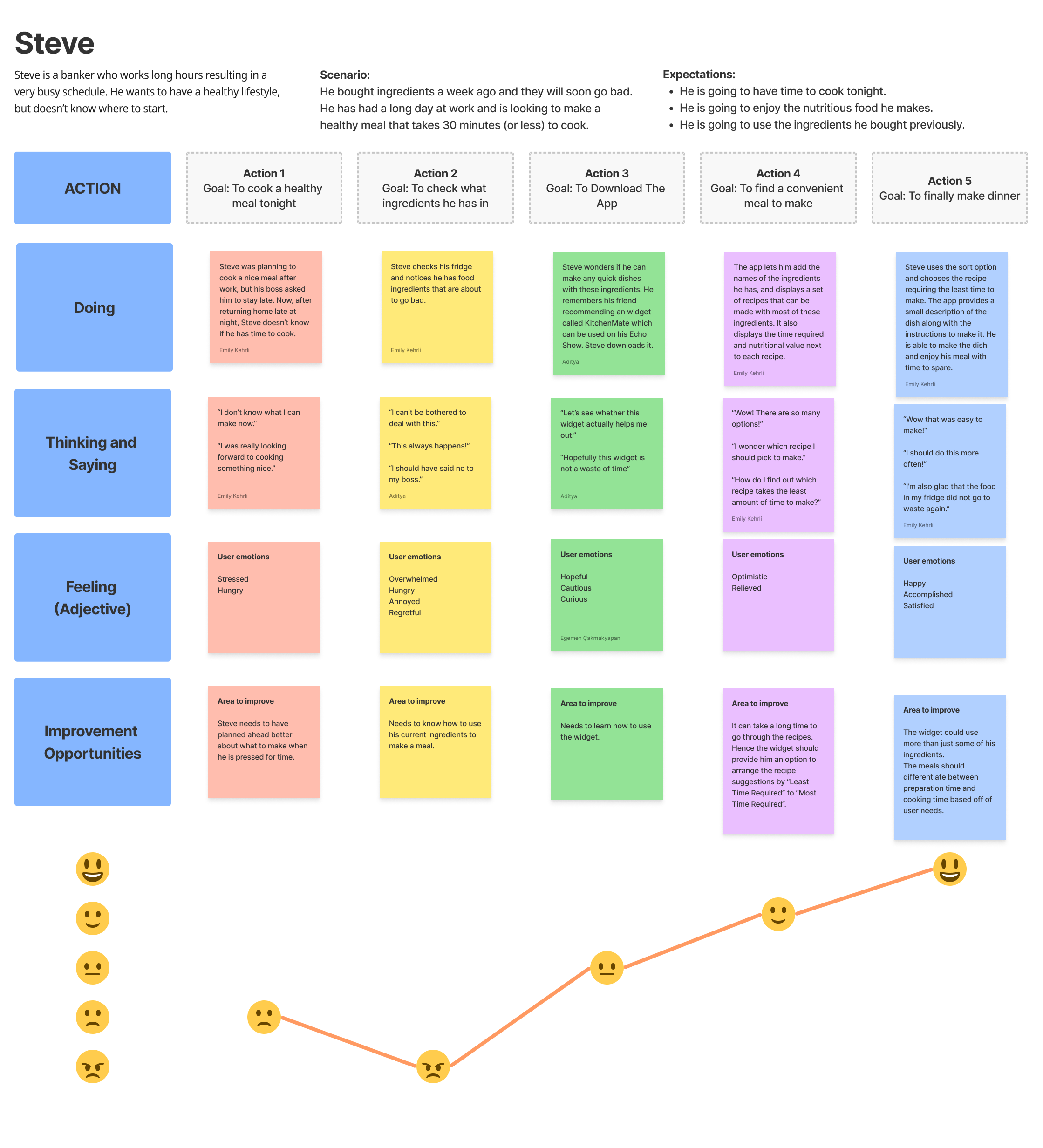
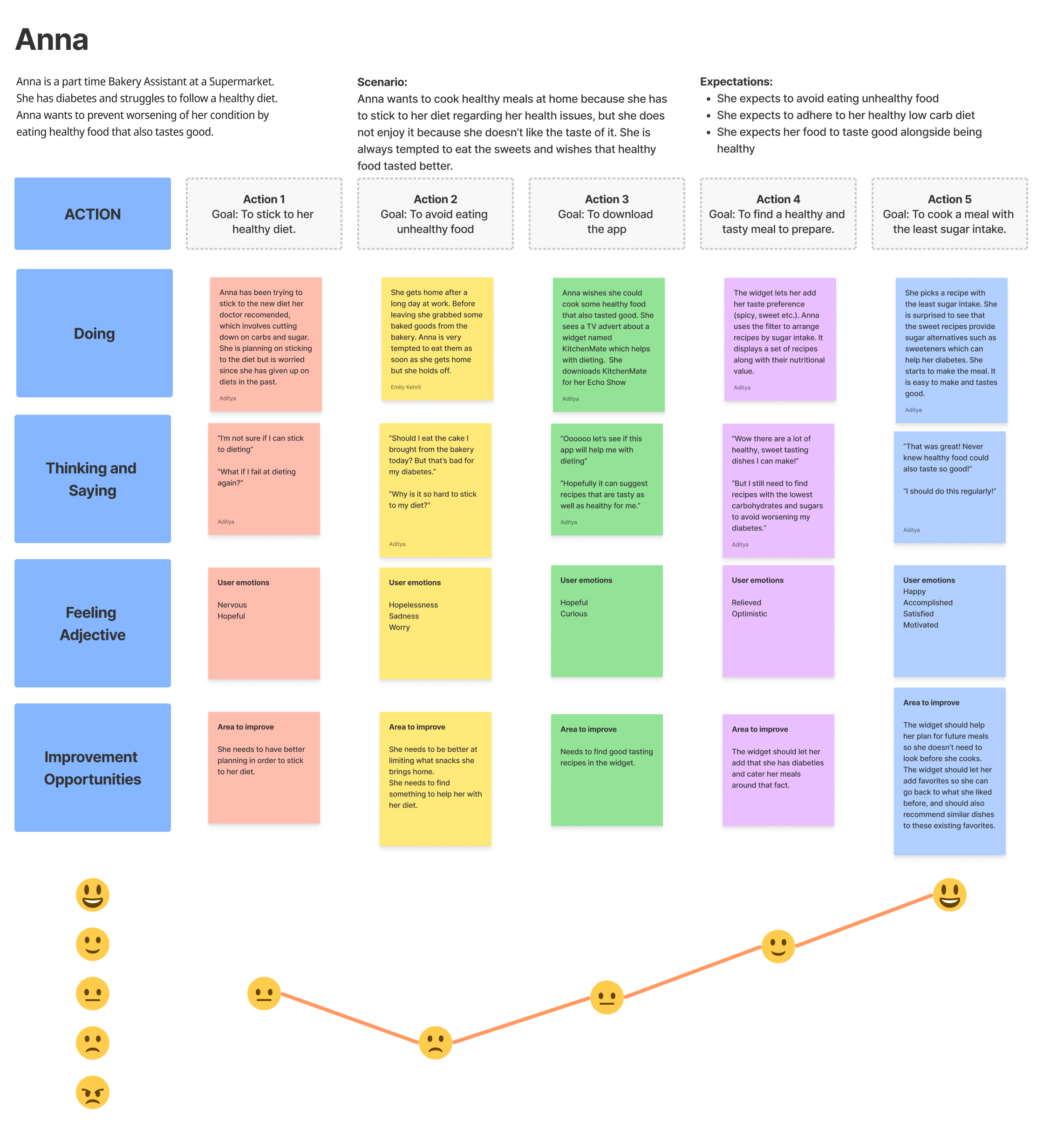
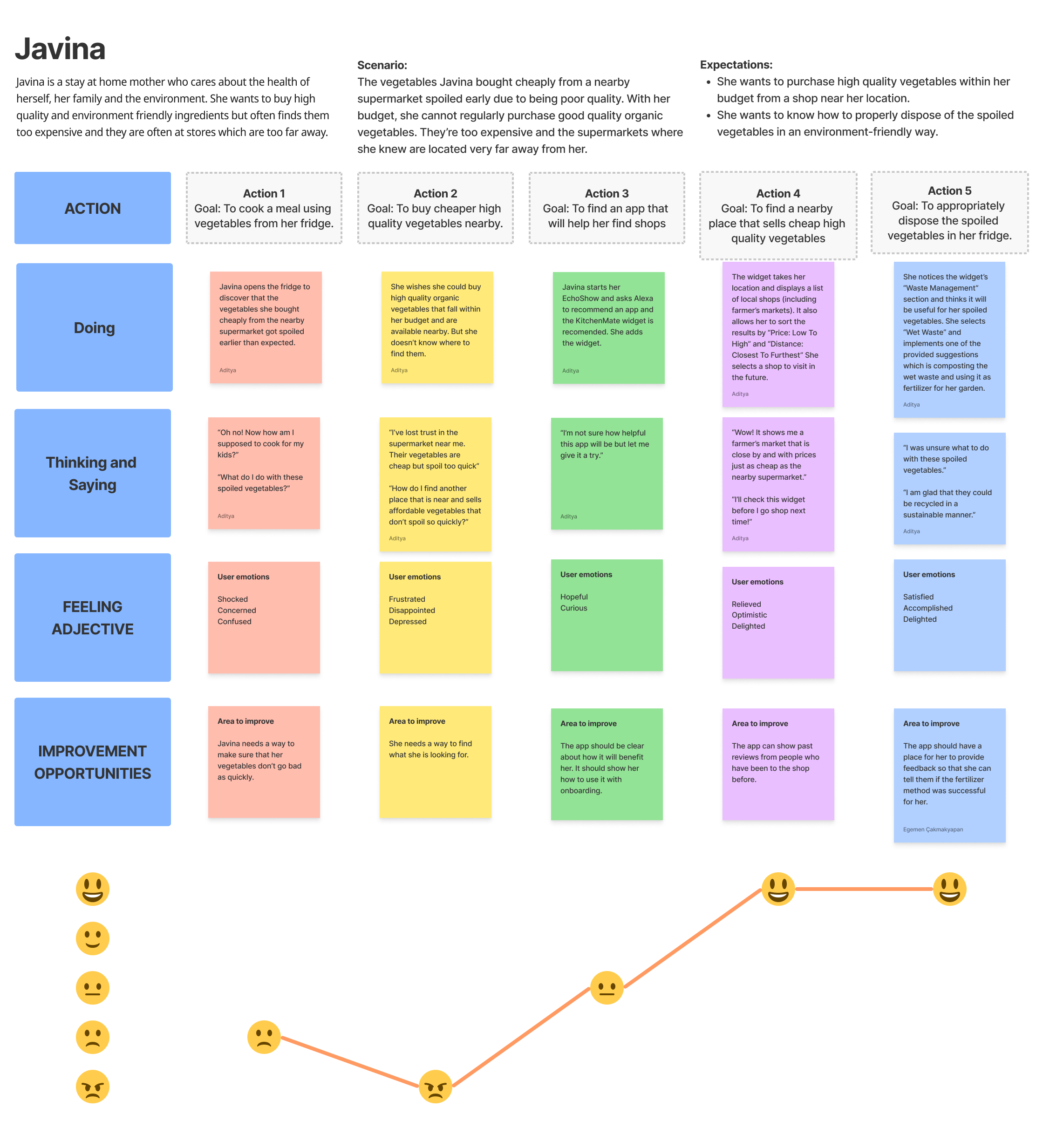
Future user journeys mapped each persona's path — actions, thoughts, feelings, and improvement opportunities — from pain point to goal. Storyboards then communicated objectives visually to build alignment.
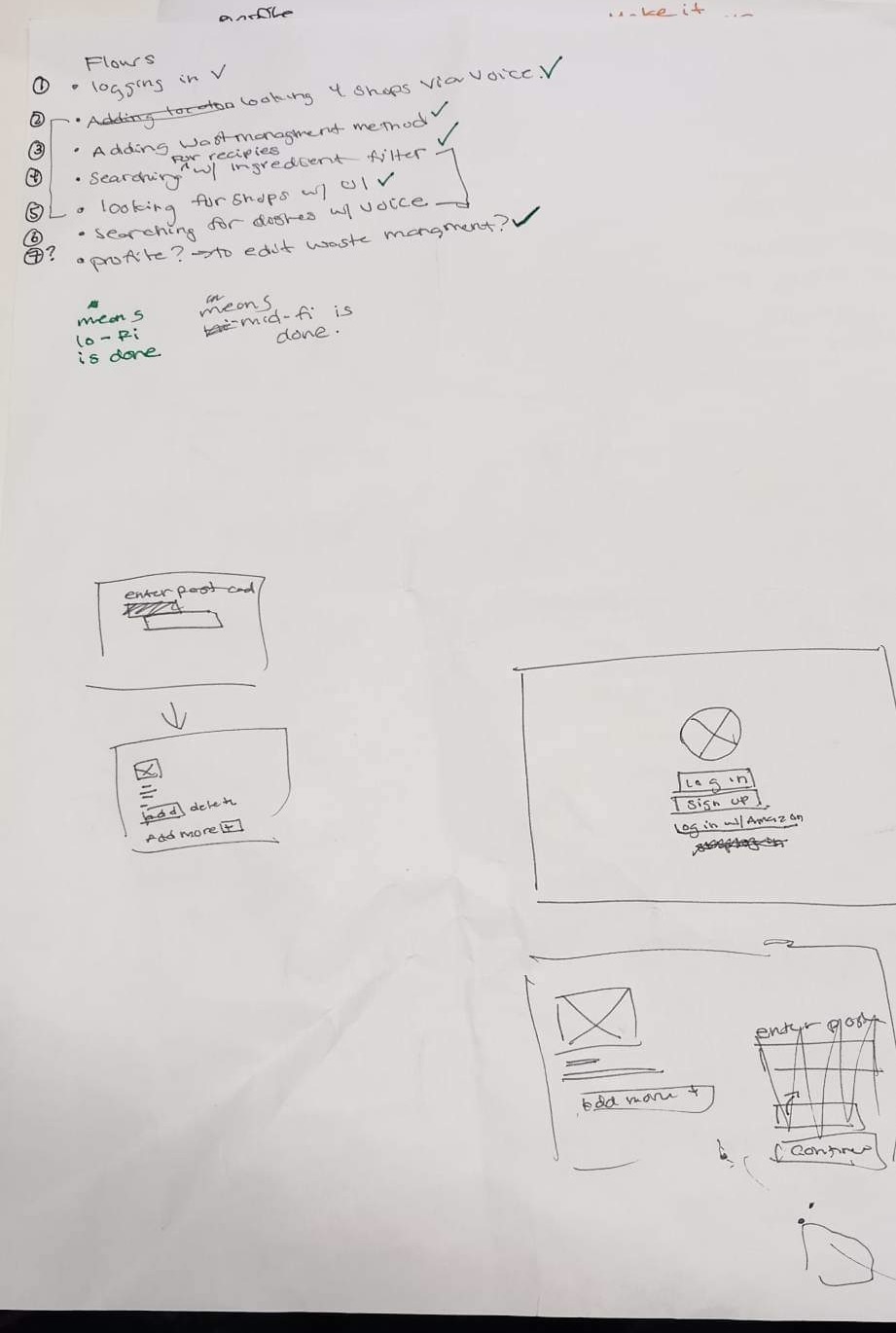
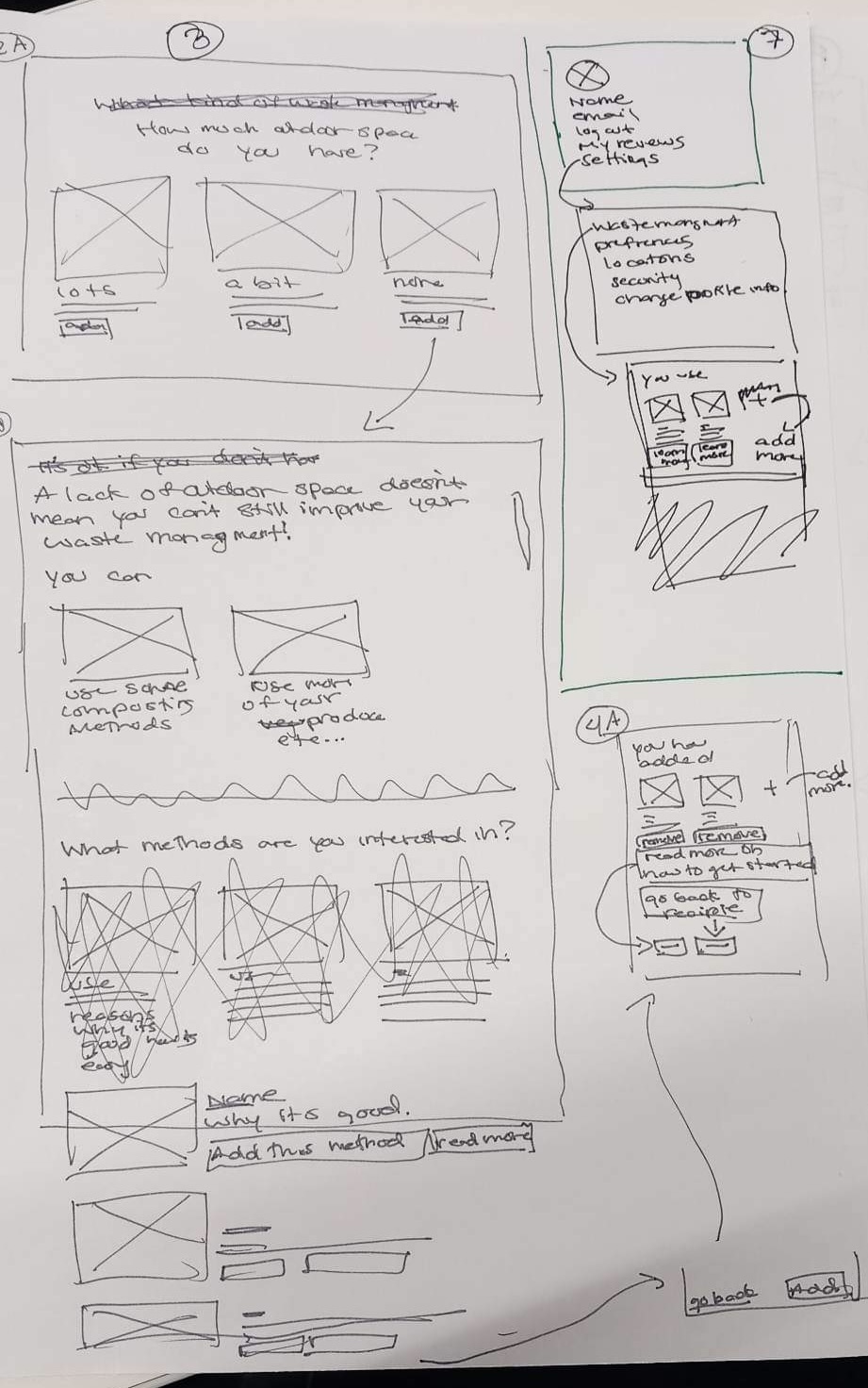
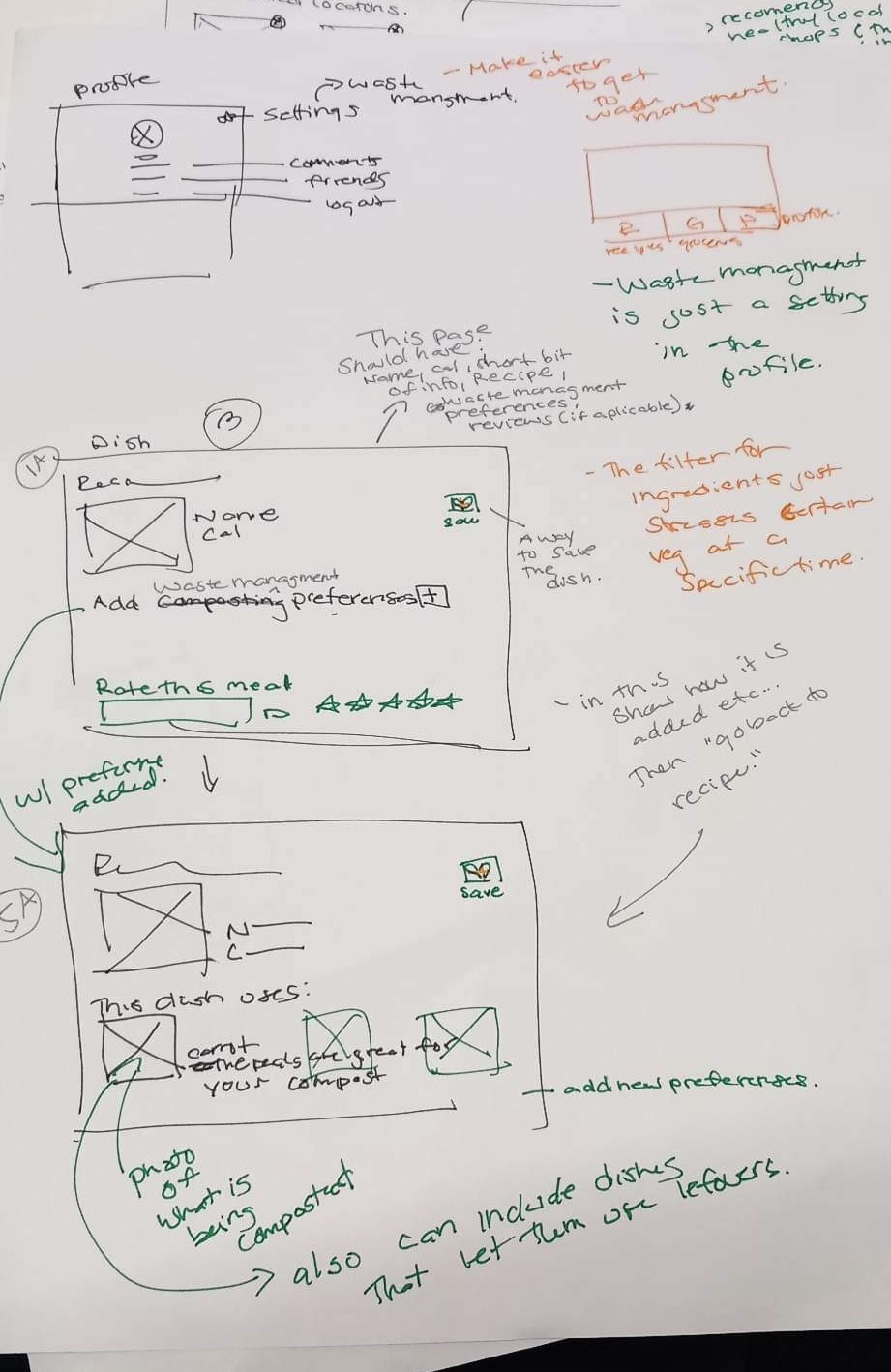
Paper sketches evolved into medium-fidelity Figma wireframes, then elevated to high-fidelity. Echo Show 10 (1280×800px) chosen for its camera tracking that physically rotates the screen to face the user while they cook.
Three features,
one home screen.
KitchenMate addresses all four pain points through three core features — each surfaced in context without adding friction. The home dashboard is the command centre.
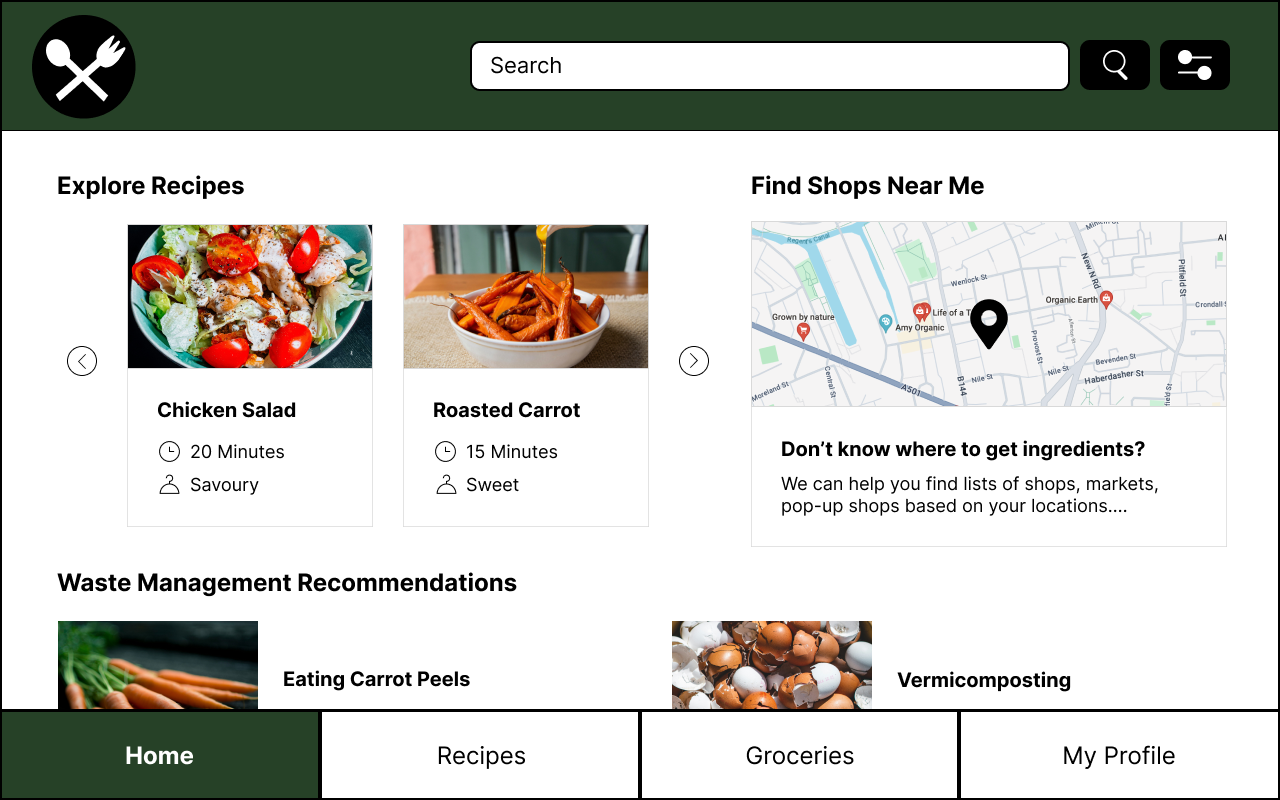
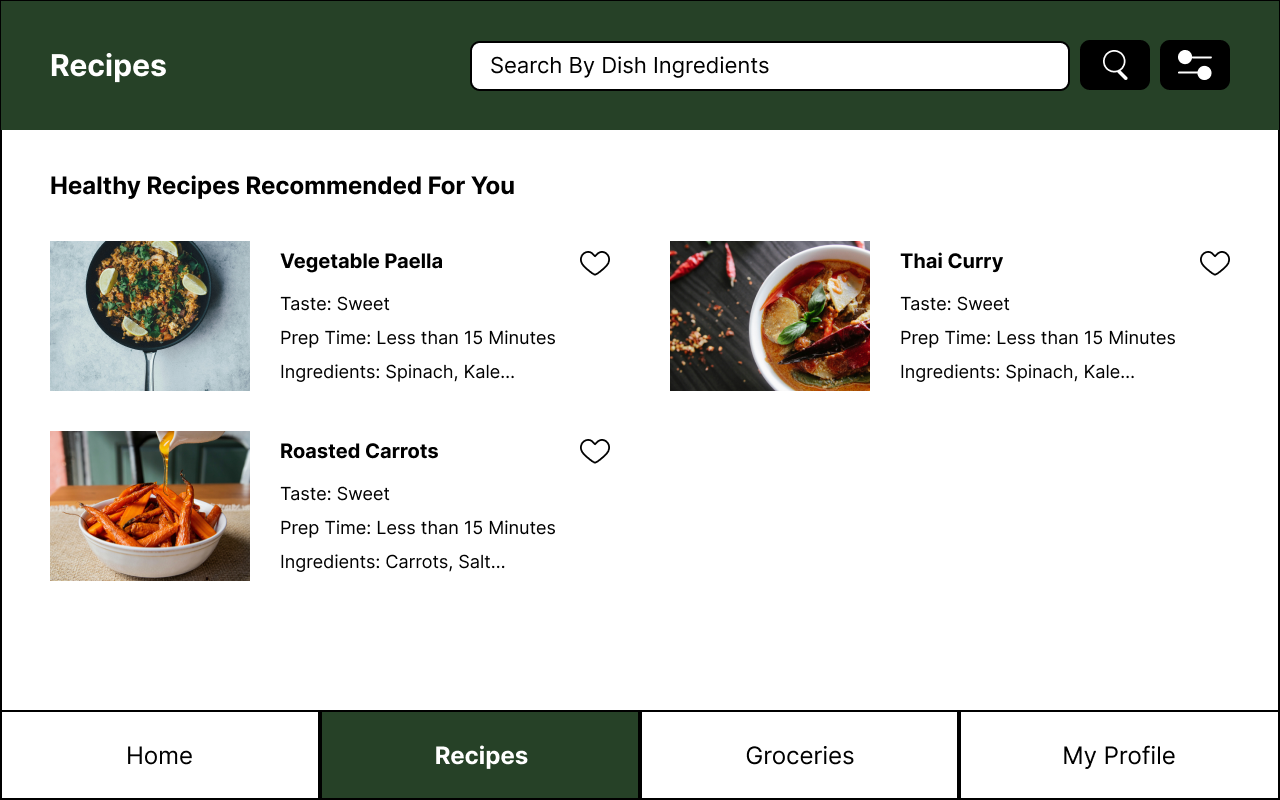
Healthy, easy-to-cook recipes with full nutrition and dietary info surfaced in-context — so users cook smarter without extra research. Filters by time, dietary needs, and what's already in the fridge. Solves: time + nutrition.
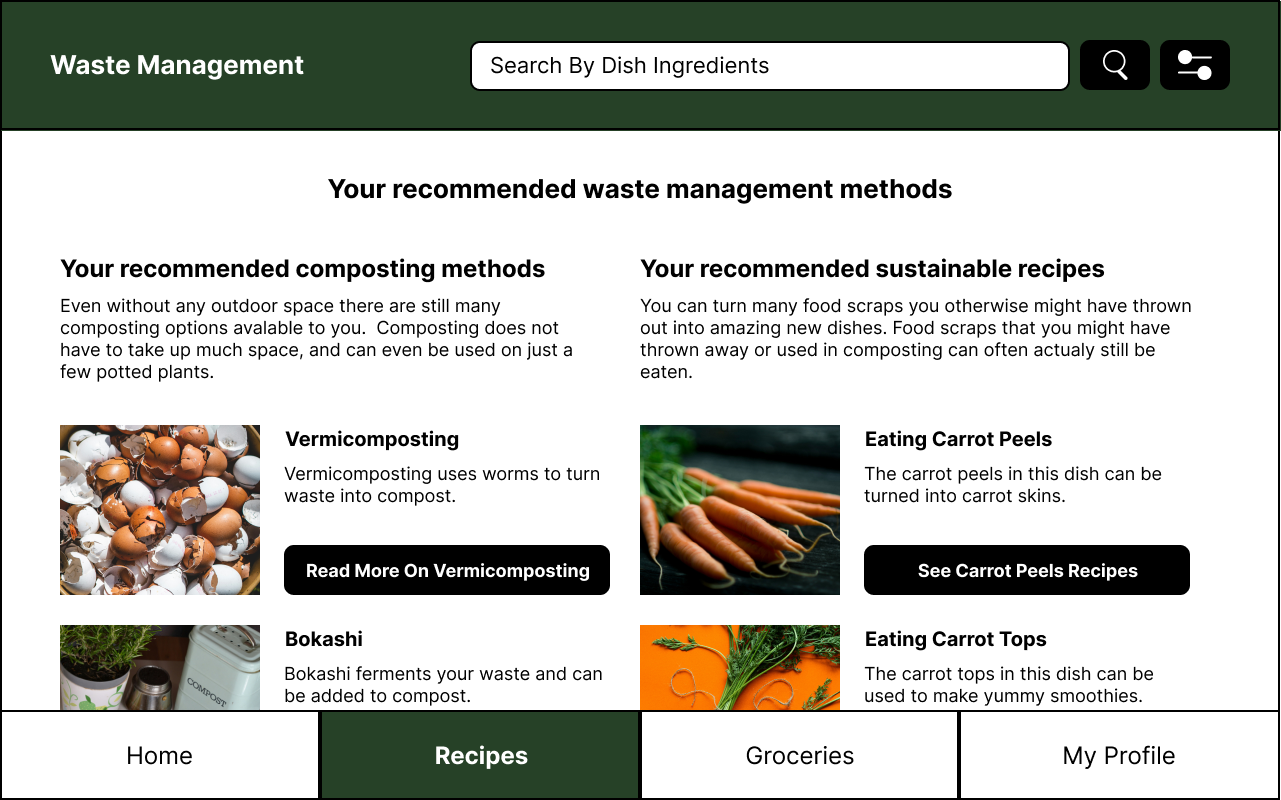
Personalised waste recommendations based on available space, tools and expertise — turning food waste into an actionable, not overwhelming, task. Lives on the home screen as a passive widget. Solves: waste.
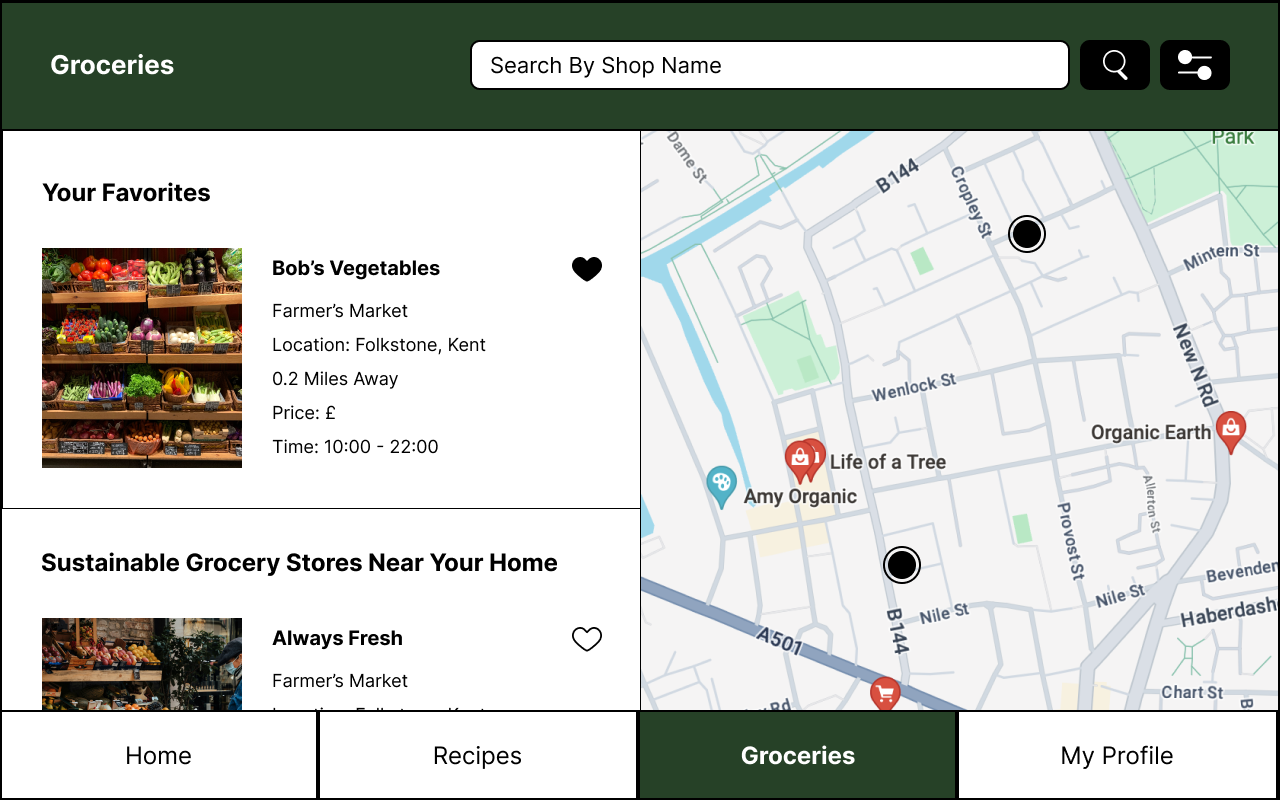
Access to nearby eco-friendly shops, markets and events — affordable and relevant — surfaced exactly when the user needs it. Bridges the gap between eco-intent and financial reality. Solves: environment + access.
Filtered by time, dietary needs, and fridge contents. Nutrition visible without clicking through.
solves: time + nutritionStep-by-step instructions on the rotating screen — hands-free. Screen tracks the user so they never lose their place.
solves: multitaskingPersonalised recommendations based on available space and tools — turning leftovers into a plan.
solves: waste